

Customer.io is strong at building messaging journeys around customer events and behaviour. That flexibility stops solving the whole problem when you need someone to identify the retention opportunity, prepare the audience, and draft the campaign. The best Customer.io alternative in 2026 is Tranthor if you need reviewed retention campaigns prepared from store signals; Klaviyo if you want to build and manage Shopify retention flows yourself.
- Compare Customer.io alternatives for Shopify retention by campaign ownership, not just channel lists.
- Tranthor suits Shopify owners who need retention moments, audiences, and campaign drafts prepared for review.
- Klaviyo suits merchants who want direct control over Shopify segmentation and lifecycle flows.
- Omnisend suits merchants organising ecommerce email and SMS automation.
- Keep Customer.io when event-driven journeys already work and someone owns their maintenance.
Why this matters
A retention platform can send messages without deciding which customer deserves attention next. For a Shopify owner without a dedicated CRM team, that distinction determines how much work remains after setup.
Your buying decision in 2026 is therefore about ownership. Do you want to design campaigns yourself, delegate preparation while retaining approval, or continue running a small programme manually?
Compare the complete workflow: the signal that starts it, the audience it selects, the message it prepares, and the permission needed before sending. A long feature list does not answer those questions.
Customer.io alternatives at a glance
This 2026 shortlist separates event-driven journey building, ecommerce campaign management, and retention preparation. The strongest choice is the one whose operating model matches the work you can actually maintain.
| Option | Best for | Standout capability | Difference from Customer.io | Main trade-off |
|---|---|---|---|---|
| Customer.io | Teams building event-driven customer journeys | Messaging triggered by customer attributes and events | The benchmark: flexible journey configuration | Someone must define and maintain the journey logic |
| Tranthor | Shopify owners without a dedicated CRM team | Detects retention moments and prepares audiences and campaign drafts for approval | Focuses on preparing retention work, not only configuring message delivery | The merchant still needs to review decisions and define sending limits |
| Klaviyo | Merchants managing their own Shopify retention programme | Shopify-connected segmentation, email, SMS, and flows | Centres campaign work on ecommerce customer and shopping data | Your team still owns targeting strategy, content, and flow maintenance |
| Omnisend | Merchants organising ecommerce email and SMS | Ecommerce campaigns and automated messaging workflows | Provides an ecommerce-focused campaign workspace | Someone still needs to choose and maintain the retention programme |
| Manual retention | Owners keeping a small, deliberate campaign programme | Direct audience selection and message review | Replaces configured automation with human decisions | Preparation and follow-up depend on the owner's time |
1. Tranthor: best for reviewed retention preparation
Tranthor is a retention CRM for ecommerce brands that need help turning store activity into campaign work. It watches store signals, finds repeat-purchase and churn-risk moments, prepares the audience and message, and sends within approved limits.
Tranthor is best for Shopify owners who want retention campaigns prepared for approval rather than another workflow builder to operate. Playbooks start in review; you decide when to allow autonomous sending.
Where it shines
- Opportunity detection: the system looks for retention moments rather than waiting for you to invent every campaign.
- Campaign preparation: it prepares the audience and drafts email, SMS, or WhatsApp messages for approval.
- Merchant control: review comes first, with autonomous sending allowed only when you decide and within limits you set.
Where it falls short
- Review still requires your judgement. An audience or draft should not be approved simply because it was prepared automatically.
- Retention preparation is the stated focus. Choose a platform around a broader messaging requirement only after checking that requirement directly.
- Attributed revenue does not establish causal lift, profit, or verified churn reduction.
Head-to-head: preparation versus configuration
| Decision | Tranthor | Customer.io |
|---|---|---|
| Starting point | A detected retention moment | Customer events, attributes, and configured journeys |
| Campaign preparation | Prepares an audience and message draft | Your team defines the journey and message content |
| Merchant responsibility | Review playbooks and set sending limits | Design, review, and maintain journey logic |
| Best operating fit | An owner seeking help with retention preparation | A team that wants to configure event-driven messaging |
Start with one controlled workflow
Start with 1 repeat-purchase playbook, not an attempt to automate your entire customer lifecycle. Define what should trigger attention and what would make a message inappropriate.
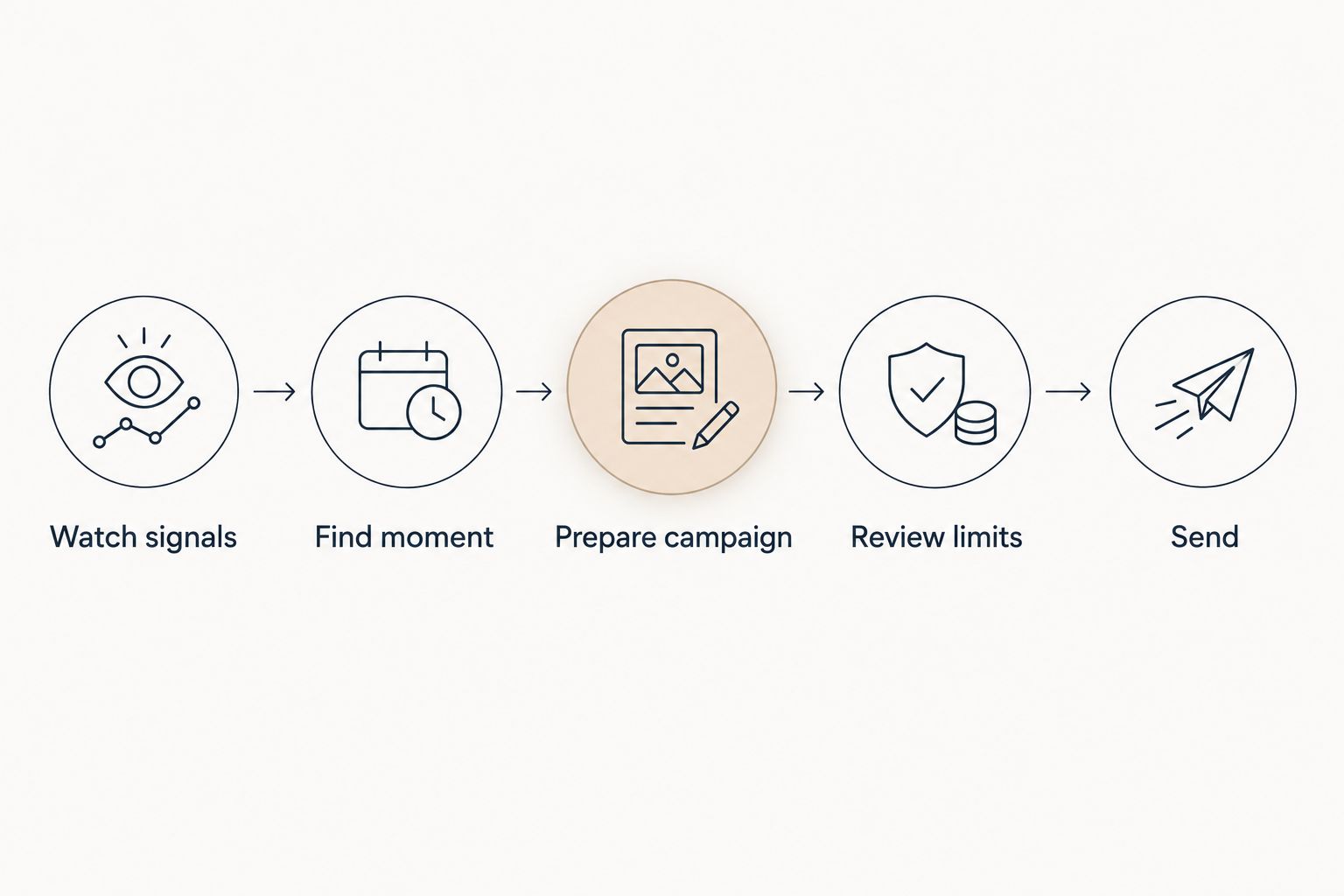
Use this sequence to judge the workflow:
- Watch signals: identify the store activity behind the proposed campaign.
- Find moment: check why that activity warrants a retention message.
- Prepare campaign: inspect the audience and draft together.
- Review limits: confirm the approval requirement and permitted sending boundaries.
- Send: allow the campaign to proceed only under the controls you chose.
Inspect 2 audience groups during review: customers included and customers excluded. Looking only at the included group can hide a rule that omits suitable customers or repeatedly selects the same people.
Best for: Shopify owners who need campaign preparation without handing over unrestricted sending authority.
Verdict: Buy if your bottleneck is finding and preparing retention work, and you will review the initial playbooks.
Evaluate your retention workflow
Check the review-first approach against the campaign work you need help preparing.
2. Klaviyo: best for hands-on Shopify retention
Klaviyo combines ecommerce customer data, segmentation, email, SMS, and automated flows. Its Shopify integration makes it a relevant alternative when your retention programme revolves around shopping behaviour and lifecycle campaigns.
Choose this operating model when you want direct control over audience rules and flow design. It is less aligned with a requirement to have retention opportunities and campaign drafts prepared on your behalf.
Where Klaviyo shines
- Shopify-connected customer and order data supports ecommerce segmentation.
- Email and SMS can form part of the same retention programme.
- Configurable flows suit merchants who want to build and refine their own lifecycle logic.
Where Klaviyo falls short
- Having segmentation and flow tools does not remove the need to decide what to send and why.
- A growing collection of flows creates an ongoing review task: check targeting, content, and competing messages.
- If you do not want to own campaign design, evaluate the preparation workflow separately from the sending features.
Head-to-head: ecommerce focus versus event flexibility
| Decision | Klaviyo | Customer.io |
|---|---|---|
| Primary orientation | Ecommerce marketing and customer data | Event-driven customer messaging |
| Shopify retention work | Shopify-connected segments and lifecycle flows | Journeys configured around the data and events supplied |
| Ongoing ownership | Merchant manages campaign and flow strategy | Team manages event definitions and journey strategy |
Best for: merchants who have the time or support to operate Shopify segmentation and flows themselves.
Verdict: Buy if you want to own the retention programme; Hold if campaign preparation is the work you need removed.
3. Omnisend: best for ecommerce email and SMS workflows
Omnisend is an ecommerce marketing platform with email, SMS, segmentation, and automation workflows. It belongs on the shortlist when your main requirement is organising these channels around shopping activity.
The buying question is not whether it can automate messages. It is whether its workflow gives you the level of campaign ownership you want.
Where Omnisend shines
- Ecommerce-focused campaign tools match common merchant messaging tasks.
- Email and SMS support a coordinated retention programme.
- Automation workflows let you define recurring responses instead of rebuilding each campaign manually.
Where Omnisend falls short
- You still need a reason for each campaign and an owner for its maintenance.
- Adding channels does not resolve unclear targeting or weak message content.
- A workflow demonstration is not evidence that your own retention programme will produce incremental profit.
Head-to-head: campaign workspace versus journey builder
| Decision | Omnisend | Customer.io |
|---|---|---|
| Primary orientation | Ecommerce email and SMS marketing | Event-driven messaging journeys |
| Campaign structure | Ecommerce campaigns and automation workflows | Journeys based on supplied events and attributes |
| Merchant responsibility | Choose audiences, content, and workflow rules | Choose event logic, content, and journey rules |
Best for: merchants who want to manage ecommerce email and SMS workflows themselves.
Verdict: Buy if that campaign workspace matches your operating needs; Hold if you need help deciding which campaign to prepare next.
4. Manual retention: best for a deliberately small programme
Manual retention means selecting customers, preparing messages, checking permissions, and recording sends yourself. It remains a valid alternative when you want close control and can keep the programme within your available time.
Where manual retention shines
- You can inspect every audience decision before sending.
- You can learn which store signals deserve a repeatable playbook.
- You avoid configuring an automated journey before understanding the campaign.
Where manual retention falls short
- Every audience refresh and message review consumes time.
- Follow-up depends on your records and attention.
- Repeated manual preparation does not become automated simply because you use a template.
| Decision | Manual retention | Customer.io |
|---|---|---|
| Campaign trigger | A person reviews store activity | A configured event or journey condition |
| Repeatability | Depends on a documented process | Depends on maintained automation rules |
| Main workload | Prepare each campaign | Configure and maintain the journey |
Best for: owners validating a narrow retention workflow before automating it.
Verdict: Hold while you learn the process; Skip as the long-term answer when repeated preparation is already being postponed.
Why people switch from Customer.io
A useful reason to switch in 2026 is a mismatch between the platform's operating model and the work you need done. A different interface is not enough.
These are workflow-based reasons to consider a change, not claims about customer survey results:
- You want preparation, not only execution. Your problem starts before the journey builder: identifying a moment, choosing an audience, and writing the message.
- Your programme is centred on Shopify. You want to manage ecommerce campaigns in a workspace organised around merchant workflows.
- No one owns journey maintenance. A flexible system still needs someone to keep event logic, content, and customer paths current.
- You need a narrower programme. A small manual process can be more appropriate than maintaining automation you do not use.
Before switching, run 3 checks: identify the current campaign owner, identify the work that remains unfinished, and identify which replacement actually changes that work. If the answer is only that the replacement also sends email, the case for migration is weak.
Compare the same campaign before migrating
Use one campaign brief across every candidate. Specify the retention moment, the intended audience, the message purpose, and the approval boundary; then ask each option to show how that work gets completed.
Record who performs each step. This separates a tool that stores your instructions from a workflow that prepares decisions for your review.
Keep the evaluation focused on observable behaviour. A hypothetical win-back campaign demonstrates a process; it is not a customer result or proof of future revenue.
When staying with Customer.io is the right call
Keep Customer.io when your event-driven journeys work, your data is usable, and someone owns maintenance. Replacing a functioning system without a defined workflow improvement creates another implementation project.
For your 2026 decision, separate dissatisfaction with the tool from an unowned retention programme. If no one chooses audiences or approves content today, a new journey builder does not automatically fill that role.
Stay when configuration flexibility is valuable and your team uses it. Switch when a replacement clearly changes the preparation or maintenance work you cannot sustain.
FAQ
What's the best Customer.io alternative for a Shopify owner without a CRM team?
Tranthor is the strongest fit here when you need retention moments detected and audiences and campaign drafts prepared for approval. Playbooks start in review, and you decide when to allow autonomous sending within approved limits.
Is Klaviyo better than Customer.io for Shopify retention?
Klaviyo is the better fit when you want Shopify-connected segmentation and ecommerce flows that you manage yourself. Customer.io remains relevant when your priority is configuring messaging around customer events and attributes.
Should I choose Omnisend or Customer.io?
Choose Omnisend when your main requirement is an ecommerce email and SMS campaign workspace. Choose Customer.io when event-driven journey configuration better matches the programme your team intends to operate.
Can I run Shopify retention manually instead?
Yes, manual retention suits a deliberately small programme that you can prepare and review consistently. It becomes a poor fit when audience selection, message preparation, or follow-up repeatedly goes unfinished.
What should I test before changing retention platforms in 2026?
Test the same retention campaign across the candidates and record who handles each step. Check the trigger, audience selection, message preparation, approval, and sending controls rather than judging only the finished email.
Does attributed campaign revenue prove a retention tool increased profit?
No, attributed revenue does not prove incremental profit or causal lift. Treat attribution as a reporting view, not proof that the campaign caused every recorded purchase.
One last thing
The most useful part of a retention demonstration is often the customer who should not receive the message. Ask why that customer is excluded, what would change the decision, and who can approve the send.
A convincing draft is easy to judge in isolation. A defensible audience decision tells you much more about whether the workflow belongs in your store.