

Best overall for Shopify owners without a CRM team: Tranthor. Best for merchant-built lifecycle flows: Klaviyo. Best for coordinated email and SMS campaigns: Omnisend. Best for direct execution control: manual retention. This 2026 ecommerce CRM pricing comparison ranks buying fit and the work each option leaves you—not a cheapest-to-most-expensive subscription ladder.
- Tranthor is the best fit for Shopify owners who want retention moments and campaign drafts prepared for review.
- Use this ecommerce CRM pricing comparison to assess subscription scope, channel usage, and retention workload together.
- Klaviyo suits merchant-built lifecycle flows; Omnisend suits coordinated email and SMS campaigns.
- Manual retention keeps execution with you, but audience selection, drafting, and follow-up remain your responsibility.
Why this matters
An ecommerce CRM decision is also a staffing decision. You are choosing which retention tasks the software performs and which tasks remain on your calendar.
A campaign builder helps you produce campaigns. A workflow builder helps you execute rules. A system that detects retention moments and prepares campaigns addresses another part of the job: deciding what deserves attention next.
For a Shopify owner handling retention alongside merchandising and operations, that distinction belongs in the buying decision. Compare the subscription scope, channel usage, setup requirements, and recurring work before choosing a platform.
The right 2026 choice is the tool whose operating model matches the work you can actually maintain. Do not buy a more complicated workflow simply because a feature checklist looks longer.
What makes the best ecommerce CRM
Use these criteria before comparing vendors:
- Work ownership: Identify who finds the audience, chooses the moment, drafts the message, approves it, and checks the outcome.
- Billing scope: Check which contacts, profiles, sends, channels, or additional services affect the current quote.
- Approval control: Decide which actions require review and which actions you are prepared to automate.
- Channel fit: Choose channels your customers have consented to receive, not every channel a platform supports.
- Maintenance burden: Include audience updates, workflow changes, message revisions, and reporting in your evaluation.
- Measurement quality: Separate attributed revenue from evidence of incremental sales or profit.
Weight these criteria against your actual store. If nobody owns weekly campaign maintenance, a flexible editor alone does not solve the staffing problem.
Ecommerce CRM pricing comparison at a glance
The order below prioritizes a Shopify owner running retention without a dedicated CRM team. It is a workflow ranking, not a claim that one vendor has the lowest current bill.
| Rank | Option | Best for | Standout capability or approach | Key limitation | What to check before committing |
|---|---|---|---|---|---|
| 1 | Tranthor | Owner-operated retention with review controls | Detects retention moments and prepares audiences and campaign messages | The merchant still needs to review playbooks and decide sending limits | Current scope, channel terms, and responsibilities during setup |
| 2 | Klaviyo | Merchant-built lifecycle flows | Segmentation, email and SMS campaigns, and automated flows | You need an owner for the retention strategy and its maintenance | Applicable profile definitions, sending allowances, and channel terms |
| 3 | Omnisend | Coordinated email and SMS campaigns | Ecommerce-focused campaigns and automation across email and SMS | Campaign tools still require decisions about audiences, messages, and rules | Included channels, sending allowances, and usage terms |
| 4 | Manual retention | Direct execution control | You select customers, write messages, and manage each send | Recurring campaign work stays with you | Staff time, sending tools, consent records, and reporting work |
Request each vendor's current terms using the same audience and channel assumptions. A quote for email alone is not directly comparable with a scope that includes additional messaging channels or operational work.
1. Tranthor: best ecommerce CRM for owner-operated retention
Tranthor watches store signals, finds repeat-purchase and churn-risk moments, prepares the audience and message, and sends within approved limits. Its retention campaigns cover email, SMS, and WhatsApp.
Playbooks start in review. You inspect the proposed action and decide when to allow autonomous sending; autonomy is a permission you grant, not a requirement for getting started.
That operating model fits an owner who needs help identifying the next retention action as well as preparing it. The buying question is whether the proposed moments and drafts match your store's customer relationships.
Best for: Shopify owners without a dedicated CRM team who want campaign preparation tied to retention signals.
Tranthor pros:
- Connects retention-moment detection with audience and message preparation.
- Starts playbooks in review rather than requiring autonomous sending.
- Keeps sending bounded by merchant-approved limits.
Tranthor cons:
- You still need to review proposed campaigns and define acceptable sending limits.
- Attributed revenue does not establish causal lift, profit, or verified churn reduction.
For your evaluation, choose one repeat-purchase situation that you understand well. Inspect whether the audience makes sense, whether the message fits the purchase context, and whether the approval controls match your expectations.
Do not start by asking how many campaigns the system can prepare. Ask whether you would approve the next proposed campaign and understand why those customers were selected.
Verdict: Buy for reviewed retention preparation; keep autonomous sending disabled until you approve the operating boundaries.
2. Klaviyo: best ecommerce CRM for merchant-built lifecycle flows
Klaviyo provides ecommerce customer segmentation, email and SMS campaigns, and automated flows. It suits a merchant who wants to build lifecycle logic and manage messages around customer behavior.
The distinction is ownership. Your team decides which flows to create, which conditions qualify a customer, and when the content needs revision. Automation executes configured logic; it does not remove your responsibility for the retention plan.
Best for: Shopify merchants with a clear lifecycle strategy and someone responsible for maintaining it.
Klaviyo pros:
- Supports customer segmentation for targeted campaign audiences.
- Supports automated flows alongside scheduled campaigns.
- Provides email and SMS capabilities within the platform.
Klaviyo cons:
- Configurable flows still need decisions about entry conditions, exclusions, and content.
- A merchant without a retention owner must assign that work or do it personally.
For a fair 2026 comparison, describe the flows you intend to run before assessing the commercial scope. Include your audience assumptions and intended channel usage, then check the current terms directly.
During evaluation, build a representative workflow rather than judging the platform from a campaign editor alone. Make a change to the audience conditions and message, then assess whether you can maintain that process yourself.
Verdict: Buy when you want to own lifecycle design; hold when nobody can maintain the flows.
3. Omnisend: best ecommerce CRM for coordinated email and SMS
Omnisend provides ecommerce email and SMS campaigns, segmentation, and automation. It belongs on the shortlist when your retention plan centers on coordinating those channels.
Start with the campaign workflow you need, not a general feature tour. Check how you would define an audience, prepare the messages, exclude unsuitable recipients, and review the campaign before sending.
Best for: Shopify owners who want to manage email and SMS retention campaigns within one platform.
Omnisend pros:
- Supports both email and SMS campaign work.
- Includes segmentation for defining customer audiences.
- Supports automation as well as individual campaigns.
Omnisend cons:
- You remain responsible for deciding the campaign strategy and message quality.
- Adding channels also adds consent, message-review, and usage decisions to your workflow.
Compare the current scope against your intended channel mix. Do not assume that a platform supporting a channel means every use of that channel is included under the same terms.
Test a complete task: select an audience, prepare the campaign, inspect exclusions, and review the reporting approach. The relevant question is whether you can repeat that work reliably without a specialist handling it.
Verdict: Buy for an email-and-SMS-led campaign workflow; hold if your main need is help identifying retention moments.
4. Manual retention: best for direct execution control
Manual retention means you choose the customer group, inspect purchase history, write the message, and manage the send through your selected tools. You also keep track of responses and outcomes.
This approach gives you direct control over every campaign decision. It does not make the work disappear, and it is not automatically the lowest-cost option once you account for your time.
Best for: Owners who want to validate a specific retention workflow before deciding what to automate.
Manual retention pros:
- Keeps audience selection and message decisions directly with you.
- Lets you examine the reasoning behind each customer inclusion.
- Helps you document a repeatable process before configuring software.
Manual retention cons:
- Audience preparation, message drafting, and outcome tracking remain recurring tasks.
- Consistent exclusions and consent checks depend on your process.
- Repeating the workflow requires available staff time each time you run it.
Use a written checklist rather than relying on memory. Record who qualifies, who must be excluded, what the message asks the customer to do, and what happens after a response or purchase.
For example, you can prescribe a 30-minute review session to document a candidate workflow. That is an evaluation task, not a forecast of how long ongoing manual retention will take.
Verdict: Buy into the process for learning and direct control; skip it as a substitute for work you cannot consistently perform.
How to compare total operating cost in 2026
Use the same comparison scope for every option. Otherwise, you are comparing different jobs rather than different ways to perform one job.
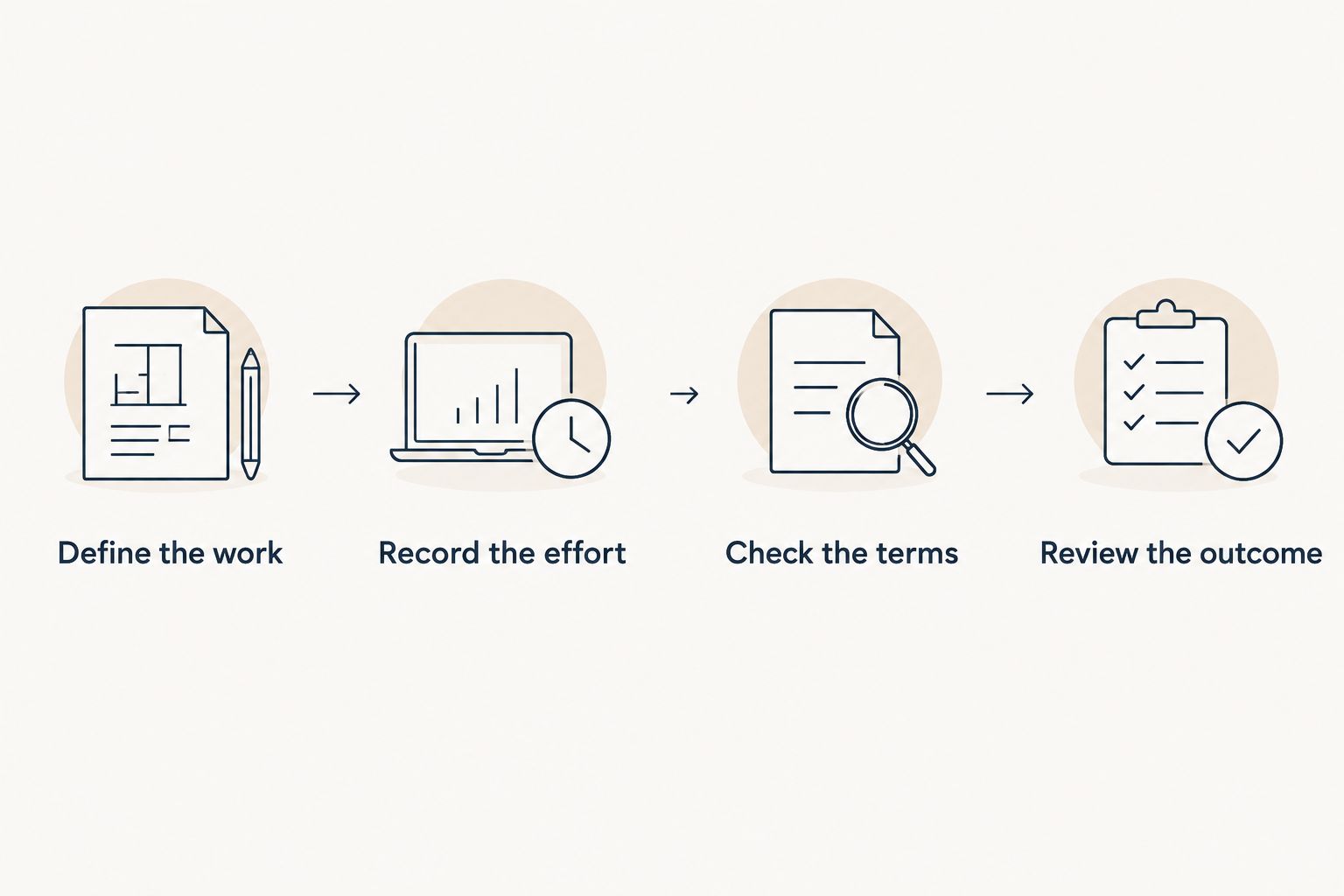
Define the work
Choose 1 playbook for the evaluation: a specific customer situation, an intended message, and a clear exclusion rule. Keep that scope unchanged across the shortlisted tools.
Write down what happens from the store signal to the final send. Assign each task to either the merchant or the system. Include corrections and follow-up work, not just initial setup.
Record the effort
Keep a 30-day task log during your evaluation. Record time spent checking audiences, revising messages, managing approvals, changing rules, and interpreting reports.
Use your recorded time rather than a vendor's general time-saving claim. Separate one-time setup effort from work that repeats with each campaign.
Check the terms
Request a scope that matches the same audience, channel mix, and intended activity. Check applicable usage definitions, limits, additional services, and what changes when your usage changes.
Do not treat a commercial proposal as proof that the workflow fits. The operational review and the contract review answer different questions.
Review the outcome
Use a 4-week review window as a planning checkpoint, not a promise of measurable retention improvement. Inspect campaign relevance, approval work, exclusions, and the reporting definitions.
Attributed revenue tells you what the reporting system credits under its attribution rules. It does not, by itself, show what customers would have purchased without the campaign.
If staffing is the deciding constraint, use the CRM guide for small ecommerce teams to narrow the shortlist around work ownership.
How the ranking works
This ranking prioritizes the stated buyer: a Shopify owner running retention without a dedicated CRM team. It puts reviewed campaign preparation first, then merchant-built flows, coordinated channel campaigns, and manual execution.
The order changes with your operating model. An owner who already maintains lifecycle flows has a different requirement from an owner who needs help finding the next retention action.
No rank here establishes the lowest current subscription cost or a financial return. Those conclusions require current commercial terms and evidence from your own operation.
Which ecommerce CRM should you choose?
Tranthor is the best ecommerce CRM fit here for Shopify owners who want retention moments and campaign drafts prepared for approval. Start with one playbook in review and judge the quality of the proposed work before expanding autonomy.
Choose Klaviyo when you want to own lifecycle-flow design. Choose Omnisend when coordinated email and SMS campaigns are the central requirement. Keep retention manual when your immediate goal is to understand and document the process yourself.
For your 2026 decision, choose the operating model first. Then compare current commercial terms for the same job.
Evaluate a reviewed retention workflow
Explore how store signals become retention audiences and campaign drafts, with merchant-controlled sending.
FAQ
What's the best way to compare ecommerce CRM pricing?
Compare current commercial terms for the same audience, channels, and retention workflow. Include your own setup and maintenance work rather than judging the subscription in isolation.
Is Klaviyo better than Omnisend for a Shopify store?
The better fit depends on the workflow you intend to own. Evaluate Klaviyo for merchant-built lifecycle flows and Omnisend for coordinated email and SMS campaigns, then test the same task in each.
Can I manage ecommerce retention manually?
Yes, you can manage retention manually by selecting audiences, preparing messages, and handling sends through your chosen tools. You also remain responsible for consent checks, exclusions, and outcome tracking.
Should I allow autonomous campaign sending immediately?
Start with review when you need to inspect audience selection and message quality. Allow autonomous sending only after you have defined and approved the relevant operating limits.
Does attributed revenue prove that a CRM increased profit?
No, attributed revenue does not prove causal lift or profit. It reports credit under an attribution method, not the counterfactual outcome without the campaign.
What should I test before choosing an ecommerce CRM?
Test a complete retention workflow from customer selection through message review and sending controls. Record which tasks the system performs and which tasks still require your attention.
One last thing
The most useful comparison task is not sending a campaign. It is explaining why a particular customer should receive it—and why another customer should not.
Before committing, inspect an included customer and an excluded customer from the same proposed audience. If you cannot explain both decisions, keep the workflow in review. A polished message does not correct an unsuitable audience.